
Retirement from the Indian Air Force brings a specific kind of stillness. After decades of living by the clock, following strict protocols, and being part of a massive, disciplined machine, you suddenly find yourself with a lot of time on your hands. I am 64 years old now. For a long time, my life was defined by the sound of engines, the structure of the military, and the responsibilities that come with serving in the armed forces. But beneath all that uniform and discipline, there was always a quiet love for music.
Music has been a constant companion for me since I was a young boy. I didn’t play an instrument back then, but I was a dedicated listener. There is something about the way a melody can settle your mind after a long day. Even during my years in the IAF, through all the postings and the different phases of my career, I always kept that connection to music alive. It was my way of finding balance. However, actually picking up an instrument myself always felt like something for "other people"—people who had started young or had some natural, hidden talent I didn’t think I possessed.
Then, in February of this year, something shifted. I came across the Flute Gandharvas community online. I can’t say exactly what it was that made me stop scrolling, but the sound of the flute had always pulled at me. It felt more human than other instruments, almost like it was an extension of the person breathing into it.
I will be honest: I was very apprehensive at first. I sat on the fence for a while, looking at the course details and then looking at my own hands. I wondered if sixty-four was too late to start something that requires so much physical control and lung capacity. I asked myself if I would look foolish trying to learn the basics at my age. In the military, you are used to being the expert, the one who knows what they are doing. Becoming a complete beginner again—fumbling with your fingers and making airy, squeaky sounds—is a humbling prospect.
But the desire wouldn’t go away. It was a small voice, but it was persistent. Eventually, I decided to stop overthinking and just go after it. I told myself that the worst that could happen was that I’d find out it wasn’t for me. So, I joined the Foundation course.
The transition to the side-blown flute was the first real hurdle. Most of us, if we’ve ever held a flute as children, held the simple front-blown ones. Holding a scale flute to the side requires a different kind of posture and a specific way of stretching your fingers. In the beginning, my hands felt stiff. My muscles weren't used to holding that position, and my breath didn't seem to want to turn into a steady note. It was a challenging switch, and there were days when I wondered if my fingers would ever find the holes naturally.
What kept me from quitting wasn't just my own willpower; it was the environment. Sri Harsh Dave and his team have a way of teaching that feels less like a classroom and more like a shared journey. Their dedication to the craft is obvious, but it’s their patience that really matters when you’re a beginner. They didn’t just give us exercises; they gave us motivation.
I also found a surprising amount of strength in the other students. There is a specific kind of bond that forms when you are all struggling with the same difficult note or the same finger transition. Seeing other aspirants, some my age and some much younger, all putting in the work, made me feel less alone in my struggle. We were all just trying to get that one clear sound.
As I moved through the Foundation course, I realized that the flute was giving me something I hadn't expected. I thought I was just learning to play songs. Instead, I found that the flute was teaching me a new way to be quiet. In the Air Force, life is often about looking outward—watching the skies, watching the equipment, watching the people under your command. But playing the flute is a journey inwards. You have to listen to your own heartbeat. You have to become aware of your own breath in a way you never have before. It is a very sobering experience. It calms the noise in your head.
Now, having completed the Foundation course, I can say that I am enjoying every single bit of this journey. The apprehension I felt in the beginning seems so far away now. I look forward to the time I spend with my flute every day. It isn’t about being perfect or performing on a stage; it’s about the feeling of the bamboo in my hands and the steady improvement that comes with practice. It has brought a sense of peace and purpose to my retirement that I didn’t know I was missing.
If I could speak to someone who is currently where I was back in January—someone sitting on the fence, wondering if they are too old, too busy, or too unmusical—I would tell them this: Just plunge.
Don't wait for a "better" time or for the apprehension to completely disappear. It might never go away until you actually start doing the work. The struggle is real, yes. Your fingers might ache, and you might feel frustrated when a note doesn't come out right. But the feeling of finally hitting a clean, pure note because you worked for it is worth every bit of that frustration.
You will never regret giving yourself the chance to learn. It’s not just about the music. It’s about discovering that even after a full career and a lifetime of experiences, there is still something new inside you waiting to be found. The flute found me at sixty-four, and I am grateful I was willing to listen.
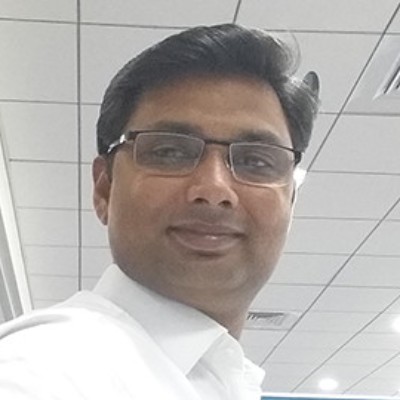
— Group Captain V R Srinivas Retired IAF, India
Begin your own flute journey
Join the free live classDid this story stir something within you?
If even one line warmed your heart — carry that spark forward. A small act of sharing keeps the flame alive in someone else.
Reflections
- Be the first to reflect on this story.
A flame waits to be opened
Finding Stillness Between the Gadgets and Screens
 by Vinod Venkataraman