
Every morning, I go for a swim. It doesn’t matter if it’s summer, winter, or the middle of monsoon season. For one hour, it’s just me and the water. I swim at a dam near my place, and the quiet rhythm of it centers my day. But this simple habit isn’t so simple for me. It’s a reminder of a promise I made to myself.
When I was twelve years old, all I wanted was to learn how to swim. My parents enrolled me in a class, and I was so excited. But within a week, I got a terrible infection in my ear. The pain was sharp and constant. It scared me, and I couldn't bring myself to get back in the water. I quit. For years, that decision sat with me—a small, quiet failure.
Then, at forty-eight, I decided it was time. I was going to learn to swim. It wasn’t easy. My body was stiff, and my mind was full of old fears. But I kept showing up. I practiced my breathing, I practiced my strokes, and slowly, that fear turned into confidence. Now, swimming is a part of who I am. That experience taught me something important: with enough practice and dedication, you can overcome things you once gave up on.
I thought about this a lot before I decided to learn the flute. It was something I had always wanted to do, but it felt impossible. A part of me worried I would quit, just like I did with swimming all those years ago. But this time was different. I made a conscious decision, a commitment to myself. I told myself, “You will not give up this time. You have to and you will learn.”
On March 29th, 2026, I held a flute in my hands for the very first time. I didn’t know anything. I didn’t know how to hold it, how to make a sound, or what any of the notes were. It felt foreign and awkward. But I remembered my swimming. I remembered that first, difficult step.
The beginning was exciting. I joined a class, and after a lot of huffing and puffing, I finally made a clear sound. Then I learned the scale, Sa Re Ga Ma Pa Dha Ni Sa. Hearing myself play those notes in a row felt like a huge victory. Soon after, I could play a simple song, “Hare Rama.” I would play it over and over, just amazed that this beautiful sound was coming from me.
But the real test came a bit later. For one of our assignments, we had to record a composition called Bhupali-2. It involved something called a double skip pyramid alankar, which was much harder than anything I had tried before. And I had to record it with perfection.
This is where my struggle truly began. I would practice for hours. I memorized all the notations. I would sing along with the rhythm, the taal, to get it deep into my memory. In my practice sessions, I could sometimes play it well. But the moment I hit the record button, everything fell apart.
I would start playing, and suddenly my mind would go blank. I’d forget a notation right in the middle. Or the note would come out as just a puff of air. My fingers would be in the right place, but my posture was off, or the angle of the flute wasn’t just right, and the sound would disappear. I was forced to stop and start again, over and over. The frustration was immense. It felt like I was taking one step forward and two steps back.
I remembered what my teacher told us. He said, “I can guide you, but the practice is something you have to do yourself. You are the only one who can identify and fix your problems.” His words echoed in my head during those difficult days. He was right. No one could do this for me.
One day, I had enough. I locked myself in a room with my flute and my recorder. I told my family I needed a few hours. I sat there, determined not to leave until I had a perfect recording. For almost five hours, I just played. I tried, I failed, I tried again. I adjusted my lips. I changed the pressure of my breath. I tilted the flute a millimeter to the left, then a millimeter to the right. I focused on every single detail.
And somewhere in those five hours, something quietly shifted. It wasn't a dramatic moment. It was just… I played the composition, and it flowed. The notes were clear. My breath was steady. I didn’t forget anything. I finished, and a huge sense of relief washed over me. I had done it.
But the real success was not the recording. The real success was what the struggle taught me. In trying to perfect that one piece, I had finally found the correct blowing position for my mouth. I understood the exact pressure needed for high notes and low notes. I learned the precise angle to hold the flute to get the purest sound. That difficult Bhupali-2 composition gave me the foundation for everything else. It built an enormous confidence in me to play the side flute.
Now, when I practice, I often think about my swimming. Learning to get a clear, consistent sound from a side-blown flute is exactly as difficult as learning to breathe properly in the water. In swimming, you can have the strongest arms and legs, but if you can’t breathe, you’ll sink. With the flute, you can know all the theory and have the fastest fingers, but if you can’t produce a good sound, you have nothing. Both are about mastering the breath, the very source of life.
My journey with the flute is still just beginning. I am not a master, and I have much more to learn. But I know I will not quit. The memory of that twelve-year-old boy who gave up is gone, replaced by the forty-eight-year-old man who learned to swim. And now, he is also learning to play the flute.
Thanks for giving me an opportunity to learn this wonderful instrument. It has given me much more than just music.
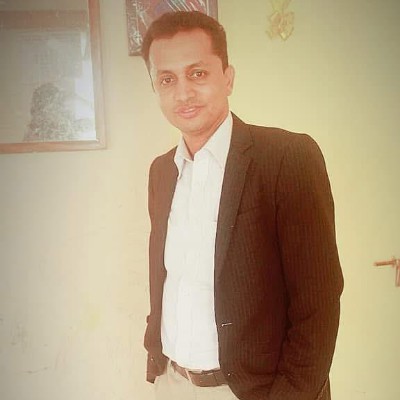
— Sunil Govind Darp
Begin your own flute journey
Join the free live classDid this story stir something within you?
If even one line warmed your heart — carry that spark forward. A small act of sharing keeps the flame alive in someone else.
Reflections
Abinaya Vasuki T
Inspiring ✨
A flame waits to be opened
A Year to Find My Breath
 by Manohara M