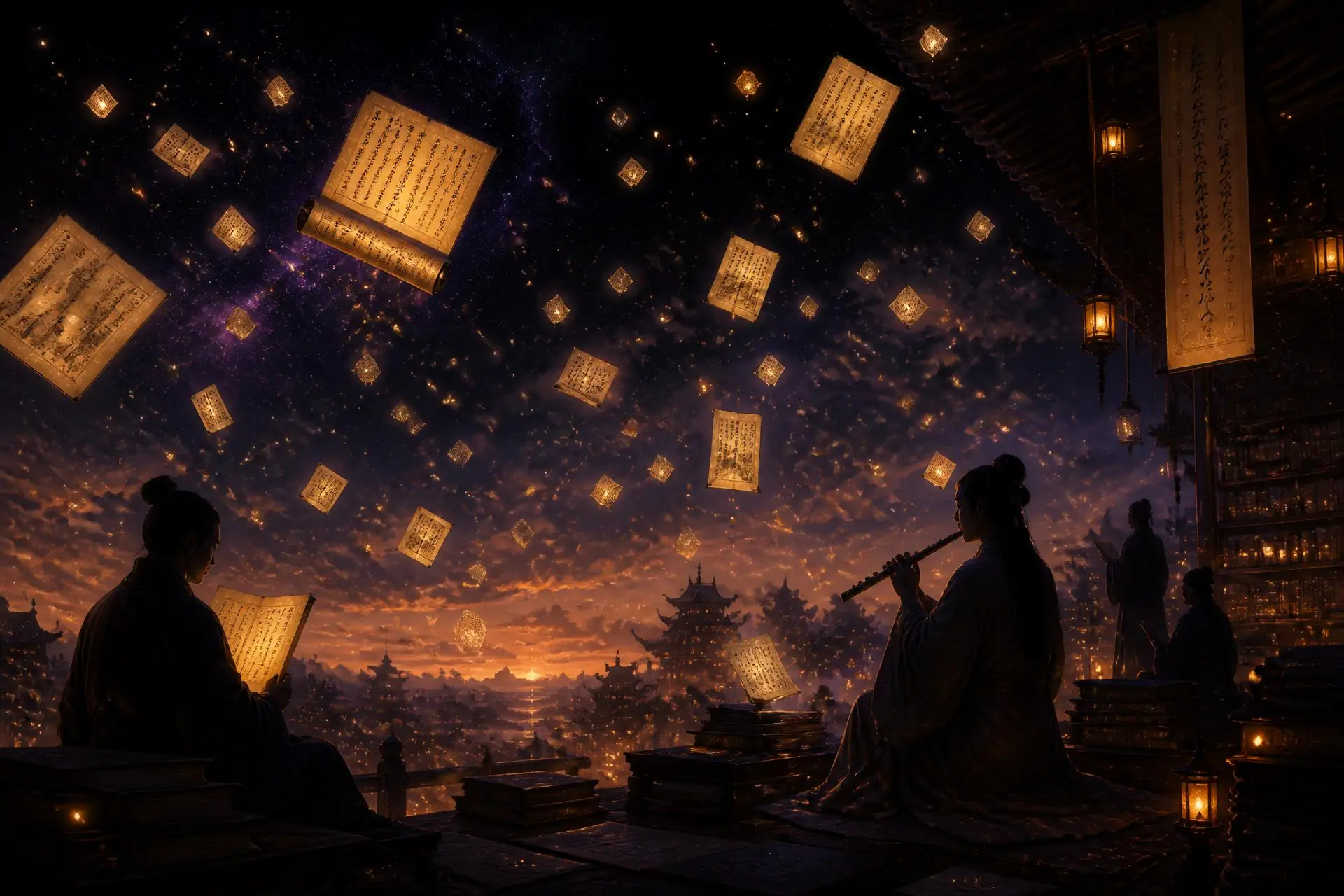
I have reached that stage in life where the house feels a little quieter than it used to. At fifty-five, the rhythm of my days has shifted. For years, my focus was entirely on my children—raising them, guiding them, and making sure they had everything they needed to succeed. Now, they are starting to find their own paths in the world. I still support them financially, of course, and I take a lot of pride in my work. I am passionate about what I do for a living, but work can only fill so many hours of the day.
When the workday ends and the house settles into a hush, I used to feel a certain kind of loneliness in those private moments. It wasn’t a loud or dramatic sadness, just a realization that I had spent so much of my life looking outward at my responsibilities that I hadn’t nurtured much for myself on the inside.
Since I was a child, I always had this nagging wish to play a musical instrument. I would see people playing and think about how wonderful it must be to create a sound like that. But life always seemed to get in the way. There were always constraints—time, money, family needs, or just the general exhaustion of being an adult. I tucked that dream away so deeply that I eventually forgot it was there. I never imagined that I would ever play the flute. It wasn’t even on my radar as a possibility.
Then, one day, I was mindlessly scrolling through YouTube shorts. I wasn’t looking for anything in particular, just passing time. An advertisement popped up for a course by Harsh Dave. I watched him talk about the flute, and something just clicked. It wasn't a long process of deliberation. Right at that moment, I decided I was going to learn. I didn't want to wait another decade.
I started my journey with a structured program at Flute Gandharva, and I’ll be the first to tell you: I am not naturally talented in music. Some people seem to pick up an instrument and the notes just flow out like water. For me, it was more like trying to move a heavy stone. It takes a lot of effort for me to learn even a simple tune. I have to repeat things over and over again before my fingers and my breath understand what is required of them.
I received my first straight flute in November 2024. I remember looking at it and feeling a mix of excitement and intimidation. It took me nearly nine months of steady practice to complete the Flute Foundation Course (FFC), finishing in July 2025. Nine months might seem like a long time to some people for a foundation course, but for me, those months were necessary. I had to learn how to breathe all over again.
The hardest part, by far, was switching from the straight flute to the side-blown flute. That transition felt almost impossible at first. Holding the flute to the side felt unnatural, and getting a clear sound was a daily battle. There were many days when I felt frustrated. I would blow into the instrument and hear nothing but the sound of rushing air, or a squeak that sounded nothing like music.
Whenever I reached that point of frustration, I had to stop and talk to myself. I would remind myself where I started. I started from zero. I didn't even know how to hold the instrument, and yet, here I was, able to play a few notes. I told myself that if I could get this far, I could go a little further. I realized that the only way to fail was to stop playing.
I decided to stop worrying about how fast I was progressing compared to others and just started enjoying the practice itself. I stopped looking at the flute as a task to be finished and started seeing it as a companion. Even if it took me twice as long to learn a song, the time spent practicing was time spent with myself, away from the worries of work and the quiet of the house.
The structured guidance from the program was my lifeline. Without a clear method to follow, I probably would have given up during those difficult months of transitioning to the side flute. Having a path laid out for me meant I didn’t have to wonder what to do next; I just had to show up and do the work.
What I didn't expect was how much the flute would change my daily life. It has completely filled that lonely space in my private moments. Now, when the house is quiet, I don't feel that sense of emptiness. I pick up my flute and I play. I am not playing for an audience. I am not playing to become famous or to perform on a big stage. I play for myself. There is a deep, quiet joy in hearing a melody come out of a piece of bamboo because of your own breath.
Looking back, I realize that natural talent isn't the most important thing. If you have it, that’s great, but if you don’t, you can still make beautiful music. What matters more is patience and showing up every day.
If I could speak to someone who is in the middle of that struggle right now—someone who feels like they aren't "getting it" or who feels frustrated by their slow progress—I would tell them to just enjoy the process. Don't worry about the end goal. Don't worry if you think you aren't talented enough. Keep playing regularly. Follow the method.
It’s okay if it takes time. It took me nine months just to get through the basics, and I am still learning every day. But those nine months would have passed anyway. I am just glad that at the end of them, I had a flute in my hand and a song in my heart. The loneliness is gone, replaced by the steady, calming practice of the notes. I may have started late, but I’ve found exactly what I needed.
— Sheel Kumar Srivastava
Watch My Flute Journey
Watch on Video:
Open VideoBegin your own flute journey
Join the free live classDid this story stir something within you?
If even one line warmed your heart — carry that spark forward. A small act of sharing keeps the flame alive in someone else.
Reflections
- Be the first to reflect on this story.
A flame waits to be opened